
When it comes to building a strong financial foundation, few numbers matter as much as your credit score. Whether you’re applying for a mortgage, refinancing a car loan, or trying to qualify for premium credit cards, lenders look to this three-digit score as one of the most significant predictors of financial reliability. But what happens when that number reaches the upper tier of the scoring scale—specifically a 790 credit score?
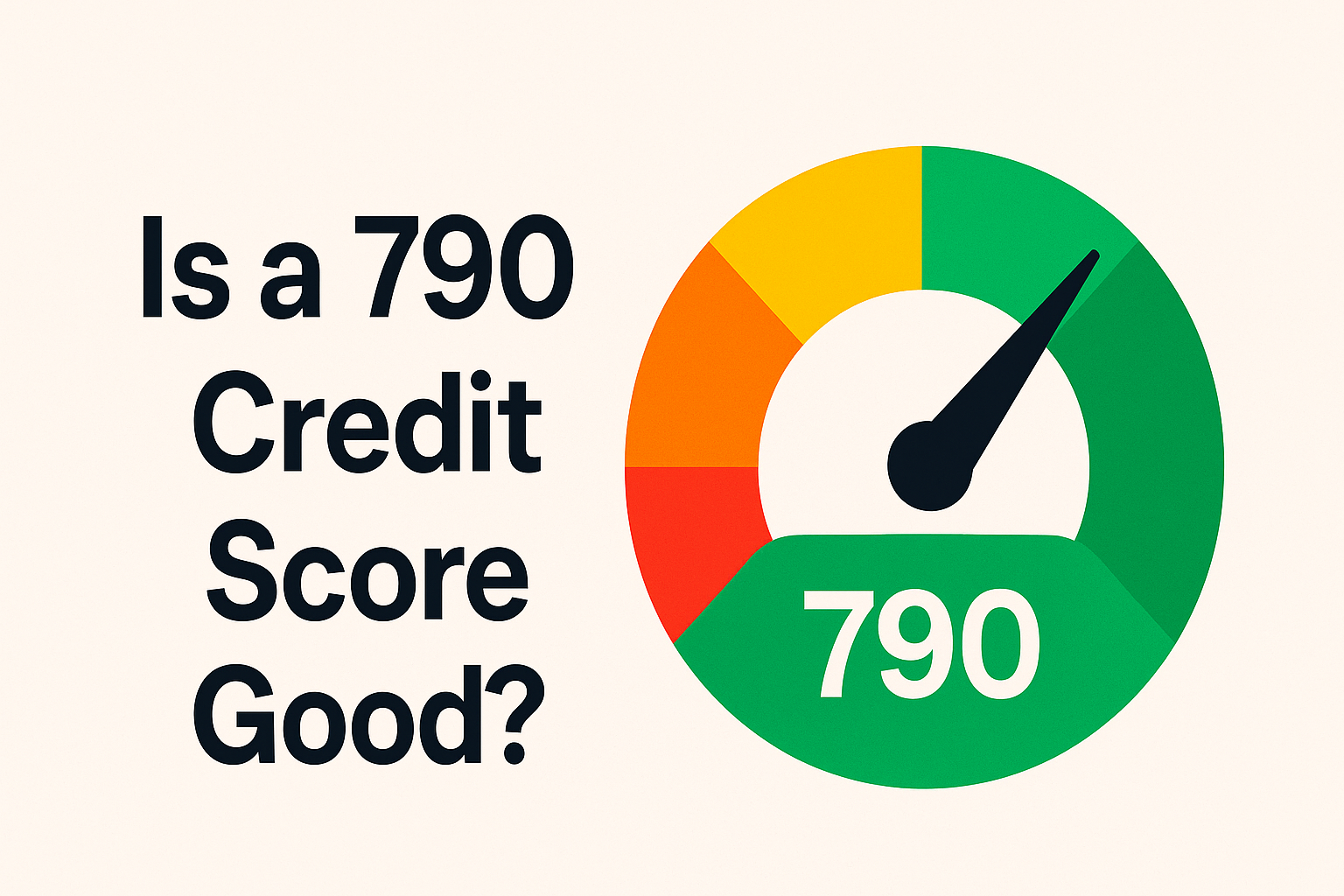
Is a 790 credit score good? The answer is an overwhelming yes. In fact, it’s not just good—it’s considered exceptional. A 790 credit score places you among borrowers with some of the best credit profiles in the country and opens doors to some of the most favorable financial opportunities available.

But how does a 790 score compare to other ranges? What does it say about your financial habits? And, most importantly, how can you maximize the benefits that come with a top-tier score?
This comprehensive guide breaks down everything you need to know.
📌 Understanding What a 790 Credit Score Means
Most credit scoring models, including FICO® and VantageScore, use a range from 300 to 850. Here’s how scores typically break down:
| Credit Score Range | Rating |
|---|---|
| 300 – 579 | Poor |
| 580 – 669 | Fair |
| 670 – 739 | Good |
| 740 – 799 | Very Good |
| 800 – 850 | Exceptional |
A 790 credit score sits at the very top of the Very Good category and only 10 points away from “Exceptional” status.
While an 800+ score is impressive, the truth is that most lenders won’t treat 790 and 800+ much differently. In many cases, a 790 score qualifies you for the same rates and borrowing opportunities as someone in the 800–850 range.
💡 Why Lenders Consider a 790 Credit Score Top-Tier
Lenders are in the business of managing risk. From a bank’s perspective, someone with a 790 score has demonstrated financial behavior that strongly predicts:
✔ Reliable on-time payments
✔ Low likelihood of default
✔ Responsible credit management
✔ Stable long-term financial habits
This makes you a low-risk borrower, which in turn unlocks better approval odds and lower interest rates.
🏦 Benefits of a 790 Credit Score
With a 790 score, you’re positioned to access some of the most favorable financial advantages available to consumers. Here are the key benefits:
1️⃣ Lower Interest Rates
Borrowers with high credit scores often qualify for reduced APRs on loans and credit cards. Over the lifetime of a mortgage or auto loan, this can save you tens of thousands of dollars.
2️⃣ Higher Credit Limits
Banks are more likely to trust you with larger credit lines, which keeps your credit utilization low and strengthens your score further.
3️⃣ Easier Loan & Mortgage Approval
Whether you’re buying a home, applying for a personal loan, or refinancing debt, a 790 score significantly increases approval chances.
4️⃣ Premium Credit Cards & Rewards
Top credit card issuers reserve their best travel, cash-back, and luxury perks for borrowers with top-tier credit.
5️⃣ Lower Insurance Premiums
In many states, auto and home insurance providers use credit data to determine risk. Good credit can result in substantial savings.
6️⃣ Stronger Negotiating Power
From interest rate reductions to better rental applications, a high score gives you leverage.
🔍 What Financial Behaviors Create a 790 Credit Score?
Reaching (and maintaining) a 790 credit score doesn’t happen by accident. It signals to lenders that you have demonstrated:
✔ A long and positive credit history
Length of credit history is a strong scoring factor for both FICO and VantageScore.
✔ Consistent on-time payments
Payment history accounts for 35% of your score in FICO models.
✔ Low credit utilization
Experts recommend staying below 30%, but borrowers with 790 scores often stay below 10%.
✔ Limited hard inquiries
Top-tier credit holders apply for credit strategically—not frequently.
✔ Diverse credit mix (loans + revolving credit)
This includes credit cards, car loans, mortgages, student loans, etc.
🧮 How Much Money Can a 790 Credit Score Save You?
Let’s compare interest rates for someone with Fair credit (620 score) vs Very Good credit (790 score) when financing a home and car.
🏠 Mortgage Example: $400,000 Loan for 30 Years
| Credit Score | Interest Rate (Example) | Monthly Payment | Total Interest Paid |
|---|---|---|---|
| 620 | 7.5% | ~$2,797 | ~$608,920 |
| 790 | 6.0% | ~$2,398 | ~$463,280 |
Potential savings: approx. $145,640
🚗 Auto Loan Example: $30,000 for 60 Months
| Credit Score | APR | Monthly Payment |
|---|---|---|
| 620 | 11% | ~$652 |
| 790 | 4% | ~$552 |
Monthly savings: ~$100
Total savings: ~$6,000 over 5 years
✈️ What Can You Do With a 790 Credit Score?
Plenty. Here are some opportunities:
🔹 Refinance a mortgage or auto loan
🔹 Apply for premium travel rewards cards
🔹 Consolidate debt at a low interest rate
🔹 Negotiate lower insurance costs
🔹 Qualify for investment property loans
🚧 Could a 790 Credit Score Still Be Denied Credit?
Yes, because credit score is only one part of lending decisions. You could still be denied if:
❌ Your income is too low for the credit amount
❌ You have high existing debt, even with good credit
❌ You recently changed jobs or lack income stability
❌ The lender has strict underwriting rules
📈 How to Maintain (or Increase) Your 790 Score
You’re already doing something right, but here’s how to protect your top-tier score and potentially push it over 800.
🔹 Pay every bill on time
Consider automated payments to avoid late marks.
🔹 Keep credit utilization extremely low
Aim for 1–7% average utilization if possible.
🔹 Avoid excessive credit applications
Space out hard inquiries at least 6 months apart.
🔹 Maintain older credit accounts
A long credit history is a major strength at this level.
🔹 Monitor your credit reports
Dispute errors—incorrect negative data can drop your score quickly.
🧠 Common Myths About Having a High Credit Score
| Myth | Reality |
|---|---|
| “I need multiple loans to improve my score.” | Not true. Responsible use of existing credit is enough. |
| “Carrying a balance boosts my score.” | False. Paying in full is best. |
| “Closing old cards helps my score.” | Usually hurts credit history and utilization. |
| “After 800, there’s no point improving credit.” | A 790 score is already excellent, but improvement can optimize benefits. |
🔮 Will a 790 Credit Score Become Even More Valuable in the Future?
Yes, and here’s why:
📌 More employers are reviewing credit behavior
📌 Insurance companies continue linking credit to pricing
📌 Lenders use risk-based pricing more aggressively
📌 Economic uncertainty makes high-quality borrowers more valuable
Strong credit is becoming an increasingly essential part of a complete financial identity.
🏁 Final Thoughts: Is a 790 Credit Score Good?
A 790 credit score isn’t just good—it’s top-tier.
It signals to lenders that you are one of the most trustworthy borrowers in the financial system and qualifies you for some of the best lending terms available.
With a score this strong, you have:
🌟 Excellent loan and mortgage approval odds
🌟 Lower interest rates and insurance premiums
🌟 Access to elite credit cards and financial products
🌟 Significant long-term savings potential
If you maintain your habits, you may even move into the 800+ exceptional tier, but even at 790, you’re already operating in a highly desirable credit category.

Your credit score is not just a number—it’s a powerful financial tool that can support your goals, reduce financial stress, and save you substantial money over time.